Race Director Event Resources
Swimming Resources

Swimming Resources

Swim safety is the most critical element of race day operations. Athletes in the water face unique risks — limited visibility, panic response, varying conditions, and restricted emergency access. Prevention starts long before the starting horn, with proper course design, safety personnel placement, and clearly defined emergency protocols. Having the right resources is only half the equation — knowing how and when to deploy them can mean the difference between a routine race day and a life-threatening situation. The materials in this section equip you with the knowledge and tools to deliver a swim that is both safe and successful.
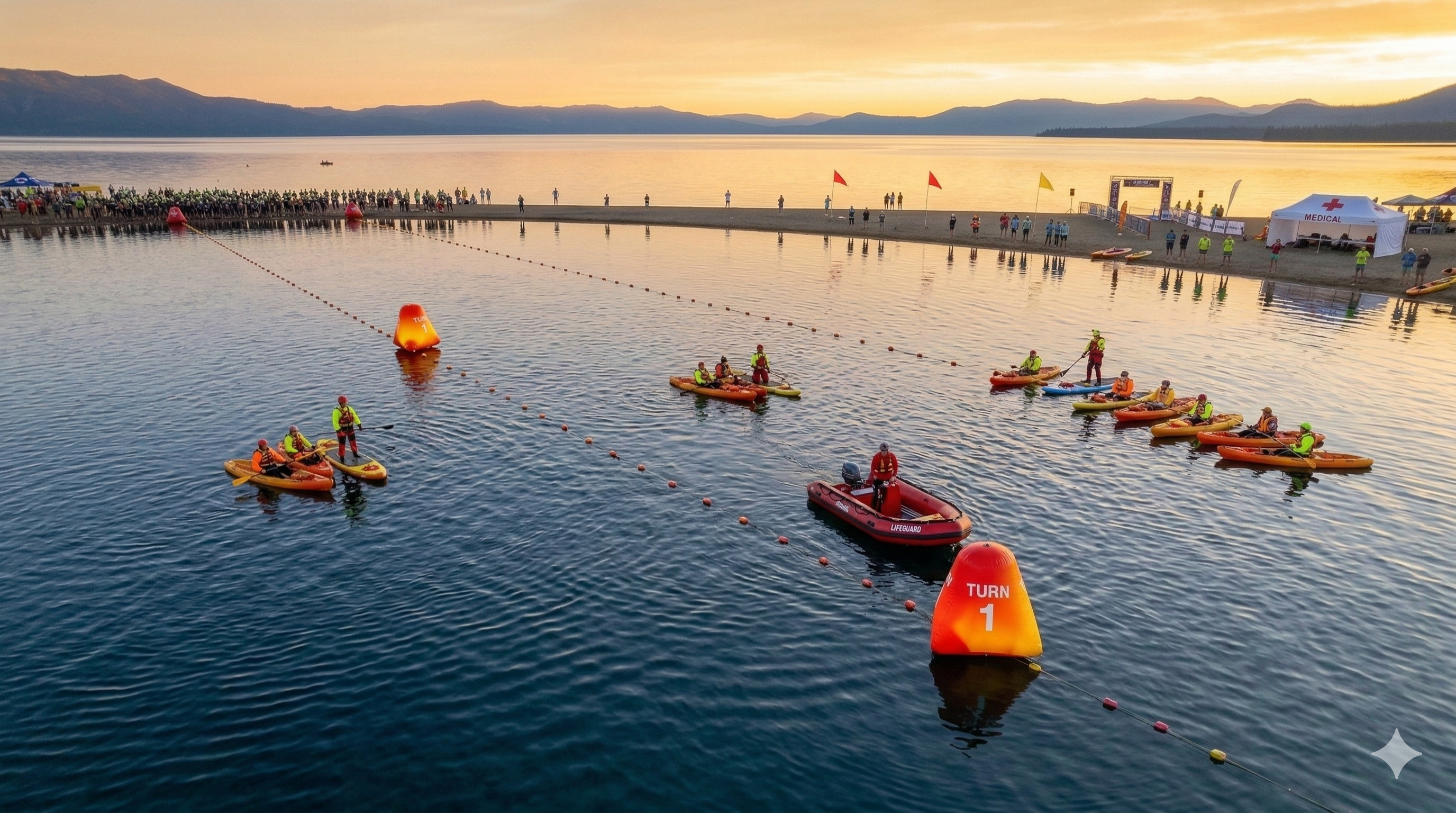
Swimming Safety
USA Triathlon Education Video
Race Director Logo
Swimming Logo
Safety Logo

Lightning Action Plans for Race Day Safety

Summary

Race directors need a structured lightning response plan built around strike-distance trigger points and clear escalation protocols. This framework covers the three-condition Emergency Alert System — yellow, red, and black — with specific actions, evacuation procedures, and communication protocols at each stage.

Key Points

  • Build your lightning plan around three strike-distance conditions: yellow (20 mi), red (15 mi), and black (10 mi)
  • Measure strike distance from the entire course footprint, not just the main venue
  • Reset the 30-minute clock after every strike within 15 miles before resuming racing
  • Pre-determine evacuation routes and shelter locations, and brief all staff before race day
  • Deploy EAS flag colors as a visible, course-wide communication tool for all stakeholders
  • Shelter in hard-topped vehicles or four-walled buildings — never tents, pavilions, or open vehicles
USA Triathlon Education Video
Race Director Logo
Swimming Logo
Safety Logo

Water Temperature Rules and Swim Distance Modifications

Summary

Race directors must measure water temperature at three course points, apply compound cold-air adjustments when conditions warrant, and use adjusted thresholds to shorten or cancel the swim — protecting athlete safety while keeping racing viable.

Key Points

  • Measure water temperature at three swim course points at 24-inch depth and average results
  • Use the lowest reading at or below 80.6°F; use the highest reading above that threshold
  • Apply the compound cold-air adjustment formula when water is below 71.6°F and air below 59°F
  • Cancel the swim when air drops below 42.8°F, adjusted water below 53.6°F, or measured water hits 89.6°F
  • Shorten swim distance in graduated steps — 3000m, 1500m, or 750m — based on adjusted temperature bands
  • Pre-draft communications for every scenario so wetsuit and modification announcements go out fast
USA Triathlon Education Video
Race Director Logo
Swimming Logo
Safety Logo

Swim Extraction Planning

Summary

Every swim course needs a dedicated extrication point — separate from start and exit — where safety assets deliver DNF athletes for accountability tracking and medical response. This presentation covers site selection, privacy protocols, staffing requirements, and the timing-chip procedures that ensure every swimmer is accounted for.

Key Points

  • Designate the swim extrication point during course design, not on race day
  • Separate your extrication zone from both swim start and swim exit areas
  • Pull timing chips from all DNFs immediately and report bib numbers to command and timing
  • Stage land-based medical and an ALS ambulance at the extrication point for immediate care
  • Use a pop-up tent with sidewalls, barricades, and security to protect athlete privacy
  • Verify swimmer accountability by confirming start count equals exit count plus DNFs
USA Triathlon Education Video
Race Director Logo
Swimming Logo
Race Day Operations Logo

Swim Course Design and Planning

Summary

A practical guide to designing safe swim courses, selecting appropriate buoys, and deploying anchoring systems. Covers GPS mapping, multi-loop configurations, equipment selection, and boat-based setup procedures for race directors.

Key Points

  • Design courses closer to shore to reduce emergency response times and minimize boat traffic conflicts
  • Place the first turn at least 200 meters from the start to prevent dangerous bottlenecks
  • Use five-foot sight buoys every 100 meters and seven-to-eight-foot turn buoys at directional changes
  • Match anchor type to water conditions: angular anchors for tidal, cinder blocks or mooring weights for inland
  • Map the course twice using GPS and satellite overlay, then confirm with on-water measurements in both directions
  • Deploy buoys in two-person teams with one driver and one equipment handler for safety and efficiency
USA Triathlon Education Video
Race Director Logo
Swimming Logo
Race Day Operations Logo

Swim Safety Zones and Communication

Summary

Effective swim safety requires dividing courses into monitored zones, training all on-water personnel on distress recognition and response protocols, and establishing clear communication hierarchies to ensure rapid extrication when incidents occur.

Key Points

  • Divide the swim course into safety zones and assign specific on-water assets to monitor each section
  • Concentrate extra coverage at the first and last 200–300 meters, where most incidents occur
  • Establish a clear safety hierarchy so each agency and volunteer group operates within defined roles
  • Conduct a pre-race safety briefing with a simulated rescue drill to align all personnel
  • Train all spotters to recognize distress signals: erratic strokes, disorientation, labored breathing, and skin discoloration
  • Speed determines outcomes—the faster a distressed swimmer reaches land-based care, the better the result
USA Triathlon Education Video
Race Director Logo
Swimming Logo
Race Day Operations Logo

Swim Start Logistics

Summary

A comprehensive guide to swim start setup covering venue preparation, athlete briefing protocols, acclimatization strategies, and equipment planning. Emphasis on reducing cold shock risk, managing athlete stress, and ensuring seamless transitions from arrival to water entry.

Key Points

  • Conduct mandatory pre-race briefings at the swim start before any athlete enters the water
  • Designate an acclimatization area for athletes to adjust to water temperature and reduce cold shock risk
  • Plan athlete movement flow from parking and transition to the swim start with clear signage
  • Position medical, hydration, and timing chip replacement stations near the swim start corral
  • Use trained coaches, calm experienced swimmers, or therapy dogs to reduce pre-race anxiety
  • Communicate water temperature early so athletes can stage or retrieve wetsuits without last-minute chaos
Bike

Cycling Resources

The bike leg covers the most distance and introduces the highest speeds on race day — making course design, traffic management, and athlete compliance essential to a safe event. Race directors must account for road conditions, intersection control, vehicle separation, and equipment standards long before riders clip in. From drafting enforcement to mechanical support and emergency vehicle access, every detail of the bike course demands advance planning. The resources in this section provide the frameworks and tools to help you deliver a bike segment that is fast, fair, and safe for every participant.

Bike Course
USA Triathlon Education Video
Race Director Logo
Cycling Logo
Safety Logo

Traffic Safety Plans for Bike Course Logistics

Summary

Race directors need structured traffic control and course diagram processes to secure permits, coordinate with municipalities, and ensure athlete-vehicle separation on bike courses. This walkthrough covers MOT/TCP plan development, a five-step intersection mapping method, and approval best practices.

Key Points

  • Contact local permitting agencies early to confirm traffic control plan requirements and submission deadlines
  • Create MOT or TCP plans even when not formally required to strengthen course safety documentation
  • Use a five-step process: screenshot intersections, mark routes, map vehicle flow, plan assets, then seek approval
  • Color-code discipline routes distinctly so course coordinators and city officials can differentiate bike, run, and swim paths
  • Map every intersection frame by frame, detailing cone placement, officer positions, and lane assignments
  • Hold an all-city meeting the week of the event to confirm alignment and resolve last-minute changes
USA Triathlon Education Video
Race Director Logo
Cycling Logo
Safety Logo

Bike Course Design and Safety Planning

Summary

Race directors must balance athlete safety, community impact, and operational logistics when designing bike courses. This presentation covers course direction, road conditions, crossing protocols, multi-distance signage, and loop structure trade-offs to build safer, more efficient bike legs.

Key Points

  • Minimize left-hand turns or use police-assisted crossings to reduce vehicle-cyclist conflict
  • Match road widths to anticipated athlete volume, accounting for traffic on open courses
  • Inspect road surfaces continually and coordinate with public works to patch hazards before race day
  • Deploy warning signage, marshals, and hay bales at blind bends and sharp downhill turns
  • Color-code signage by distance and communicate the system to athletes before race day
  • Weigh multi-loop pros like reduced road impact against cons like congestion and drafting risk
Run and Aid Stations

Run & Aid
Stations Resources

The run is where races are won, lost, and — in extreme conditions — where athletes are most vulnerable to heat illness, dehydration, and overexertion. Course layout, aid station spacing, and medical monitoring all play a direct role in athlete outcomes. A well-designed aid station is more than cups on a table — it's a frontline checkpoint for safety, nutrition delivery, and early intervention. The materials in this section cover course design principles, aid station operations, and the protocols that keep athletes moving safely from the first mile to the finish line.


Run and Aid Stations Resources
Transition and Finish

Transition & Finish
Resources

Transition is where three disciplines become one race — and where confusion, congestion, and safety gaps are most likely to emerge. A well-organized transition area keeps athletes moving efficiently while maintaining clear flow patterns, equipment security, and emergency access. The finish line carries its own operational demands — timing accuracy, medical screening, crowd control, and post-race athlete care all converge in a compressed space. The resources in this section address the planning, layout, and execution details that make transitions seamless and finish line operations safe and celebratory.
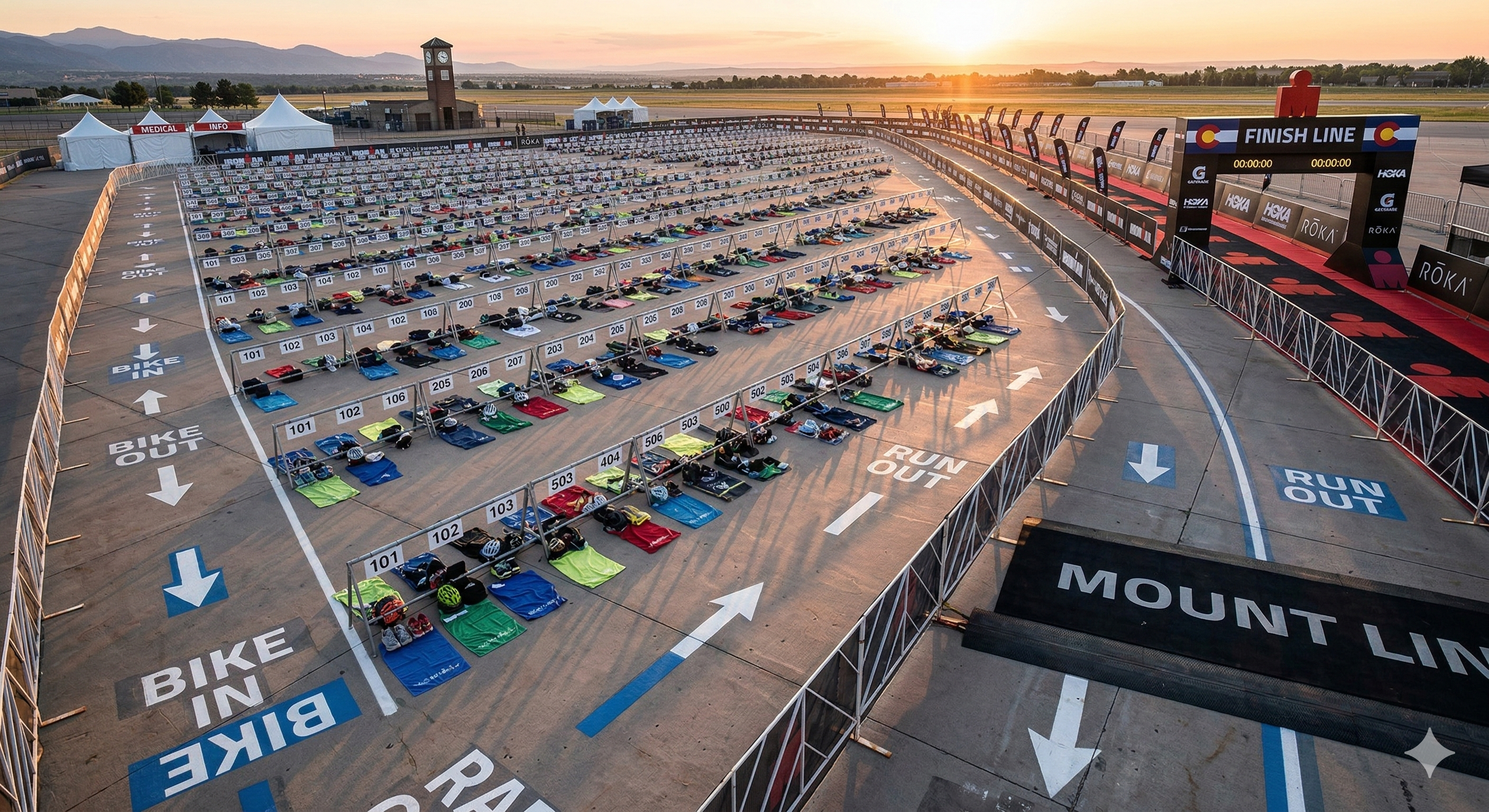
Transition and Finish
Safety, Weather, and Incident Command

Safety, Weather, &
Incident Command Resources

Safety is not a single plan — it's a system of coordinated protocols, personnel, and decision-making frameworks that must function under pressure. Weather monitoring, lightning response, incident command structure, and medical action plans all work together to protect athletes, volunteers, and spectators. Race directors who invest in these systems before race day are the ones best prepared to act decisively when conditions change. The materials in this section cover emergency action planning, weather thresholds, communication protocols, and the command structures that keep an event under control when it matters most.
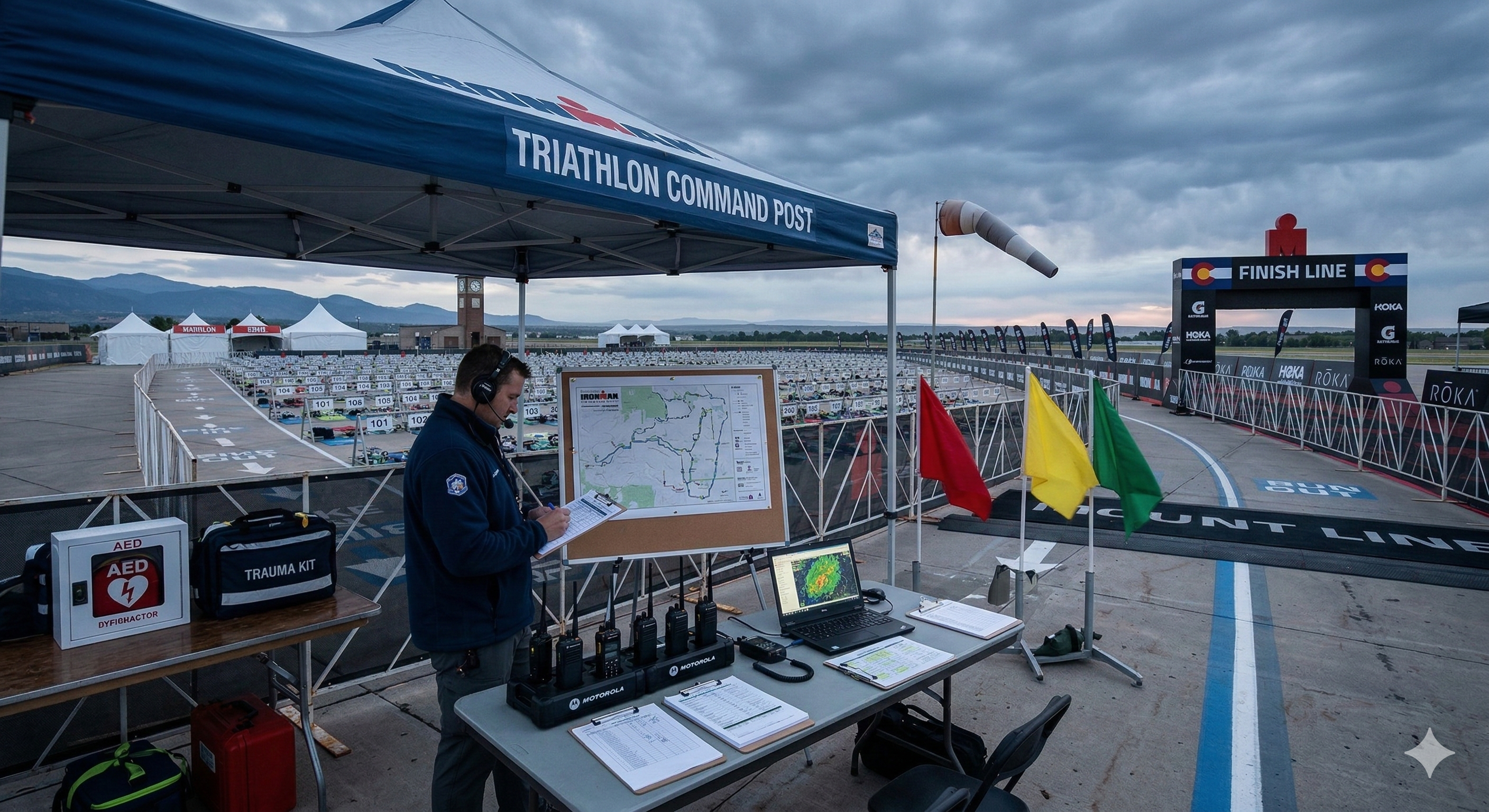

Safety Weather and Incident Command
USA Triathlon Education Video
Race Director Logo
Swimming Logo
Race Day Operations Logo

Incident Command System Essentials for Race Directors

Summary

The Incident Command System (ICS) provides a standardized framework for multi-agency coordination at triathlon events of any size. Adopting ICS principles builds trust with municipal partners, creates clear chains of command, and ensures systematic planning when every detail matters.

Key Points

  • Adopt ICS so your event team and municipal agencies speak the same operational language
  • Mirror the agency ICS structure in your own org chart to enable seamless cross-team communication
  • Appoint your incident commander carefully — a high-level decision-maker, not necessarily the race director
  • Scale ICS to your event: one person can fill multiple roles at small races; large events subdivide sections
  • Brief all staff and agencies on the ICS structure before race day to ensure swift execution
  • Complete free FEMA courses (ICS 100, 200, 700, 800) to deepen your incident management knowledge
USA Triathlon Education Video
Race Director Logo
Running Logo
Safety Logo

Heat Mitigation Strategies for Race Day Safety

Summary

Race directors need a structured heat action plan built around wet bulb globe temperature thresholds, tiered response protocols, and proactive course adjustments to protect athletes, staff, and spectators when temperatures climb on event day.

Key Points

  • Use a wet bulb globe temperature device on site — it measures heat stress more accurately than standard heat index
  • Evaluate acclimation factors like athlete origin, fitness level, age, and seasonal timing when planning events
  • Follow tiered WBGT color thresholds from green through black to trigger escalating medical and operational responses
  • Increase aid station frequency, add ice distribution points, and deploy spray cooling as temperatures rise
  • Pre-plan course shortening options and early start times, reducing each discipline by the same percentage for fairness
  • Begin weather monitoring ten days out and increase frequency as the event approaches
Paratriathlon

Para-triathlon Resources

Paratriathlon brings the full spirit of multisport to athletes of all abilities — and with it, a distinct set of operational requirements that race directors must understand and plan for. Adaptive equipment, classification-specific course modifications, accessible transition layouts, and trained handler protocols all require advance coordination. Inclusion is not an add-on — it is a commitment that must be built into every phase of event planning. The resources in this section provide the guidance and tools to help you deliver a paratriathlon experience that is equitable, safe, and competition-ready.
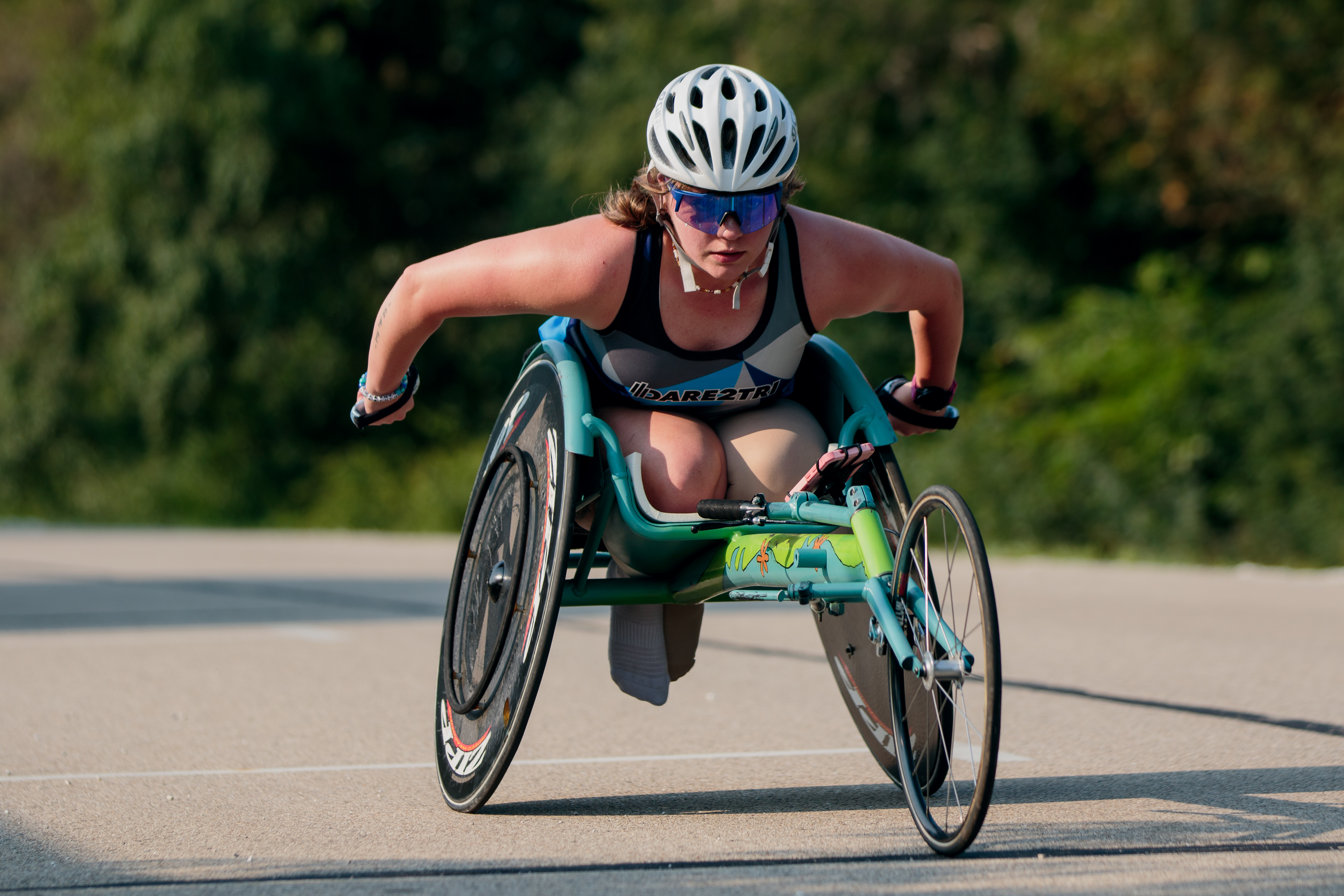
Paratriathlon
Business Operations

Business
Operations Resources

Running a race is running a business — and long-term success depends on more than great courses and strong participation. Budgeting, sponsorship strategy, insurance, registration platforms, pricing models, and post-event financial review all determine whether an event thrives or struggles year over year. Race directors who treat the business side with the same rigor as the operational side build events that are financially sustainable and professionally respected. The resources in this section cover the business fundamentals that support a healthy, growing race organization.

Business Operations
USA Triathlon Education Video
Race Director Logo
Business Logo
Race Day Operations Logo

Economic Impact and Community Relations

Summary

Race directors can strengthen agency support and community buy-in by quantifying their event's economic impact and investing in year-round partnerships — from youth programming and charity integrations to sustainability initiatives and neighborhood outreach.

Key Points

  • Partner with your CVB or tourism board to leverage agency relationships and unlock grants
  • Produce an economic impact report using post-event survey data on visitor spending and hotel nights
  • Track direct impact across three buckets: race management spend, athlete/spectator spend, and sponsor/exhibitor spend
  • Build community pride through youth programming, charity partnerships, and volunteer group donation programs
  • Align event operations with community priorities like sustainability, inclusivity, and environmental stewardship
  • Notify neighborhoods and local businesses before race day to build awareness and recruit support
USA Triathlon Education Video
Race Director Logo
Business Logo
Race Day Operations Logo

City Agency Relationships and Permitting

Summary

Race directors must earn municipal trust through preparation, transparency, and compromise to navigate the permitting process and secure long-term agency support for their events.

Key Points

  • Agencies evaluate events as a risk assessment, weighing community rewards against potential impacts
  • Prepare detailed, organized operations plans to inspire agency confidence before and during meetings
  • Schedule face-to-face meetings and course walkthroughs to foster teamwork with agency partners
  • Practice the three R's: be receptive to feedback, responsive to communication, and respectful of their authority
  • Only commit to plans you can execute — overpromising now leads to under-delivering on race day
  • Conduct a post-event debrief with agencies to review successes and build action items for next year
Legal and Reporting Resources

Legal and Reporting Resources

Running a triathlon means navigating a complex landscape of liability, insurance requirements, waivers, and regulatory compliance — often with very little room for error. A single overlooked clause in a permit application or an improperly executed waiver can expose your event to significant legal and financial risk. Beyond prevention, race directors must also know how to respond when incidents occur: accurate post-race reporting, timely insurance claims, and proper documentation are essential to protecting your event, your volunteers, and your athletes. The resources in this section help you build a legally sound foundation and maintain the documentation practices that keep your event protected year after year.

Legal and Reporting Resources
USA Triathlon Education Video
Race Director Logo
Race Day Operations Logo
Safety Logo

Insurance and Incident Reporting

Summary

Race directors need to understand USAT's insurance coverage, file incident reports within 24–48 hours, and gather thorough evidence at critical incidents to protect their events against future claims and litigation.

Key Points

  • USA Triathlon's insurance program for race directors comprises Participant Accident Insurance and General Liability Insurance policies
  • The Participant Accident Insurance is secondary coverage up to $25,000 with a $1,000 deductible
  • Race directors must file all incident reports within 24–48 hours through the Fairly Group portal
  • Critical incidents include fatalities, hospital transports, vehicle involvement, and serious bike crashes
  • For Critical Incidents: Collect photos, videos, and witness contact details at the incident and send to USA Triathlon
  • Notify USA Triathlon immediately if you receive a claim, lawsuit or correspondence from a lawyer
General Race Operations

General Race Operations

A well-run triathlon is built on hundreds of operational details that most athletes never see — from permit timelines and volunteer coordination to course markings, transition area flow, and communication protocols. Each decision ripples across every other element of race day, and the margin between a smooth event and a chaotic one often comes down to preparation and process. Whether you are directing your first sprint or managing a multi-day festival, the fundamentals of race operations remain the same: plan thoroughly, communicate clearly, and build systems that hold up under pressure. The resources in this section cover the core operational knowledge every race director needs to deliver a professional, safe, and repeatable event.
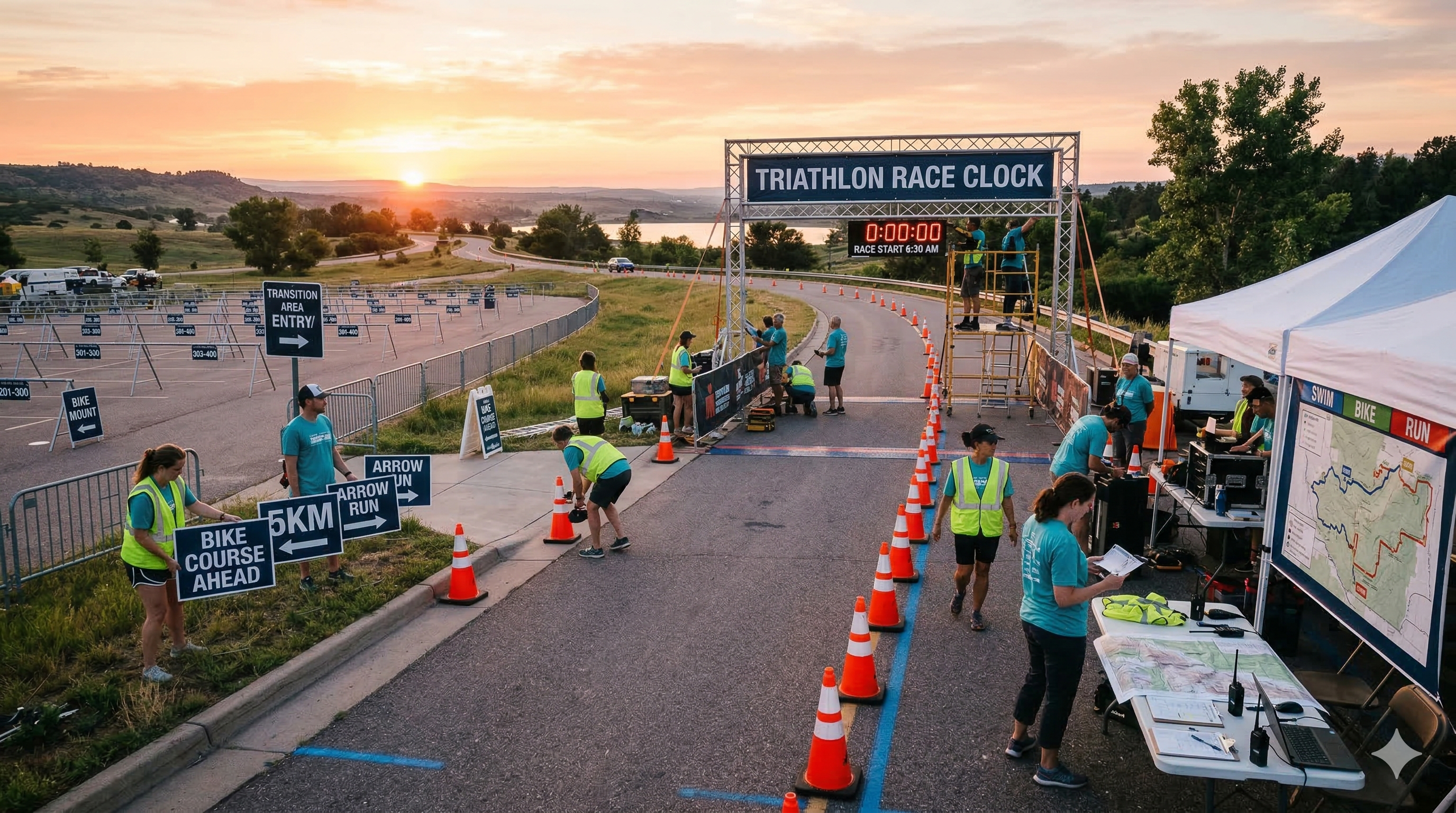
General Race Operations
USA Triathlon Education Video
Race Director Logo
Business Logo
Race Day Operations Logo

Draft-Legal Racing on the Bike

Summary

Race directors gain a practical framework for producing draft-legal bike events — from course design and wave structure to pack-riding safety considerations that differ from standard non-drafting formats.

Key Points

  • Draft-legal formats require fully closed bike courses with no shared vehicular traffic during competition
  • Separate swim starts by gender and stagger waves so bike packs never co-mingle across groups
  • Cap each wave at 75–80 athletes to manage pack density and reduce overtaking risk
  • Design wider, circular courses and designate narrow sections as no-passing zones with signage
  • Favor longer laps with fewer repetitions to simplify scheduling and reduce results complications
  • Plan for higher speeds and multi-athlete incidents with pre-positioned emergency vehicle access